A coffee table is not just a simple piece of furniture; it is an important accent in the living room that serves both a practical and aesthetic function. This piece of furniture often becomes the central part of your living room, around which family life revolves – we place drinks, books, magazines, remote controls, or even display favorite works of art on it.
The right coffee table can completely change the atmosphere of your living room, while the wrong one can ruin the entire interior.
In this comprehensive guide, we will discuss how to choose a coffee table that perfectly matches your needs, style, and home space. You will learn how to evaluate the right size, shape, materials, and functionality to make a smart and lasting choice for your living room.
Assessing the Space and Choosing the Coffee Table Size
Before rushing to a furniture store or browsing online, it is essential to evaluate the available space. A properly sized coffee table will ensure comfort and harmonious furniture arrangement.
Standard rules suggest that the ideal coffee table height should be the same as the sofa's seat or slightly lower (2-5 cm). This ensures comfortable use of the table and visual harmony. In terms of length, the coffee table should not exceed 2/3 of the sofa's length – this maintains a proportional appearance.
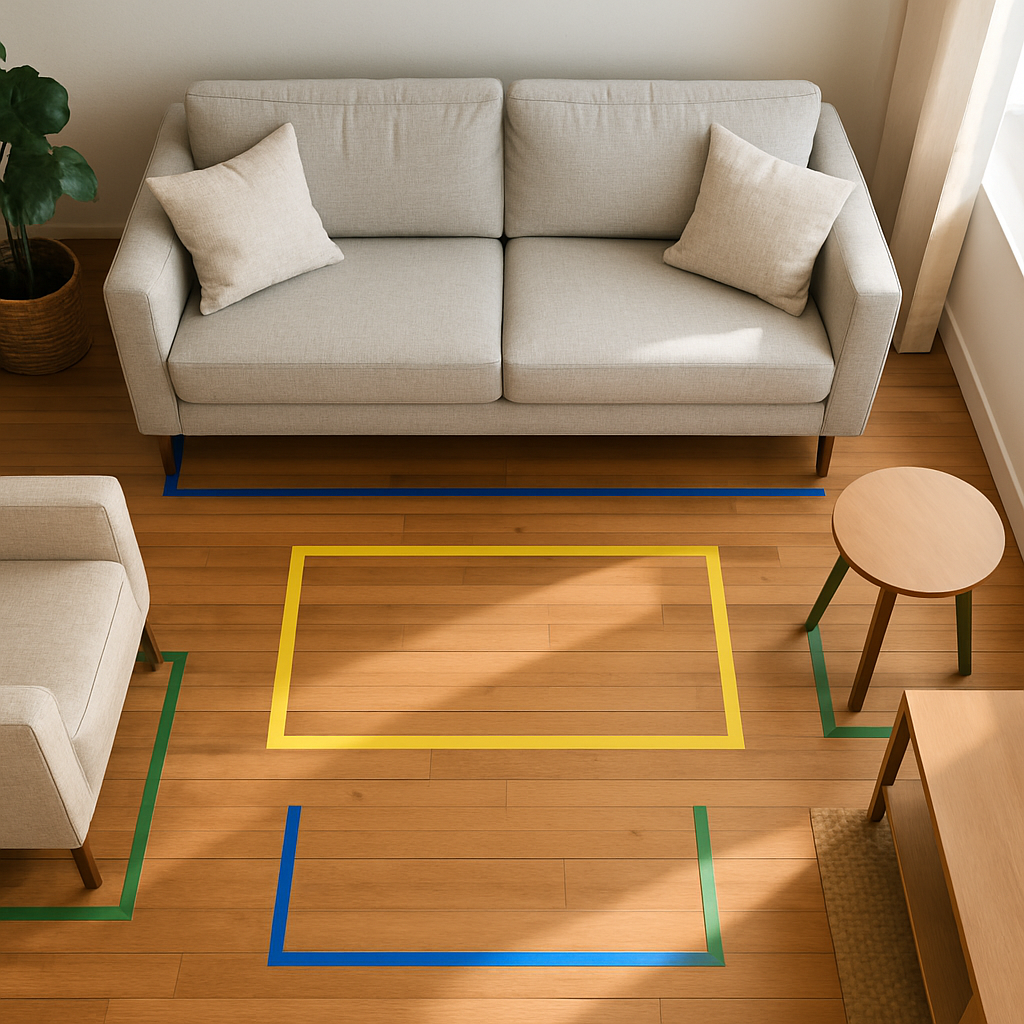
The gap between the table and the sofa should be sufficient for movement – it is recommended to leave at least 30-45 cm. If there are other large pieces of furniture in the living room, such as armchairs, a gap of about 60 cm should be left between them and the coffee table for comfortable passage.
In smaller spaces, it is worth choosing more compact solutions – for example, a narrower but longer table, or several smaller tables that can be moved as needed. In open-plan spaces, a table can serve as a visual zone divider, helping to define the living room area.
Practical Measurement Tips for Any Living Room
- before shopping, mark the intended table size on the floor with adhesive tape to better visualize how much space it will occupy
- consider not only width and length dimensions but also height – a table that is too high or too low will be uncomfortable
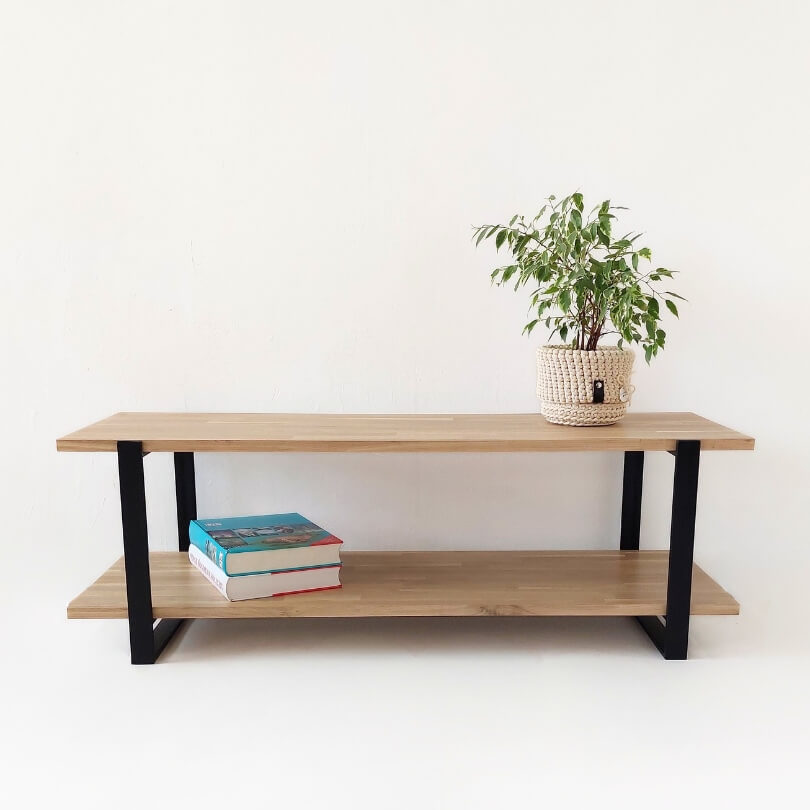
- if the living room is small, think about multifunctional solutions, such as a coffee table with an additional shelf
- don't forget to evaluate passages – can you move freely around the table once it's placed
Choosing the Ideal Shape According to Your Lifestyle
The shape of a coffee table greatly influences not only the overall look of the living room but also its functionality and safety. Different shapes have their advantages and disadvantages, so it's worth choosing based on your needs.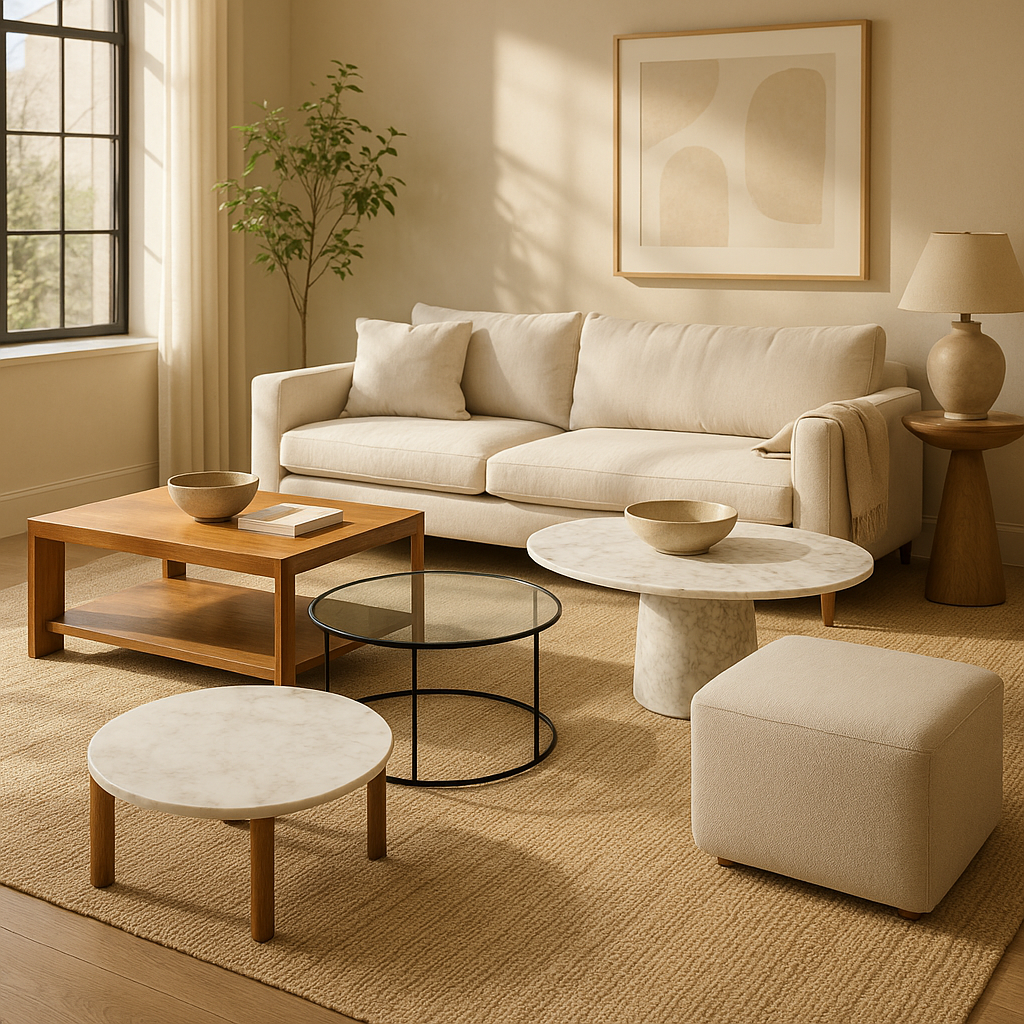
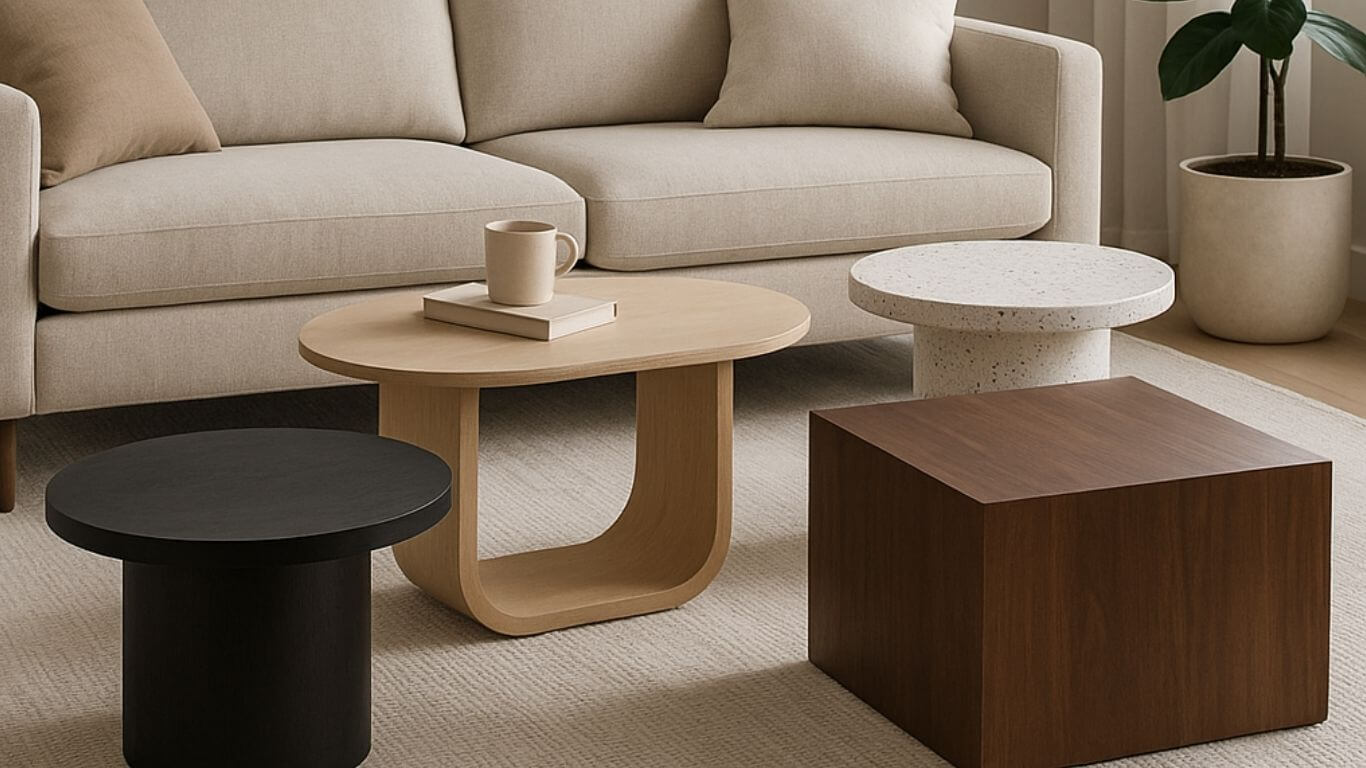
Rectangular tables are a classic and most popular choice. They are perfect for longer sofas and maximize space utilization. However, due to sharp corners, they can be less safe in homes with small children.
Round coffee tables create a softer, flowing look and are an excellent choice for smaller spaces – they are easier to move around as there are no sharp corners. For the same reason, they are a safer option for families with small children or active pets. The round shape encourages communication, as those seated are seemingly directed towards each other.
Oval tables combine the advantages of rectangular and round tables – they occupy a similar area to rectangular ones but do not have sharp corners. These tables are especially suitable for spaces where movement occurs from one zone to another, as rounded edges facilitate movement.
Square tables look best in more spacious living rooms, especially when the sofa and armchairs are arranged around them. They provide a symmetrical appearance and often have more surface area for items. However, like rectangular tables, they have sharp corners.
For families with small children, it is recommended to choose round, oval tables or those with rounded corners. It is also worth considering soft, upholstered coffee tables that reduce the risk of potential injuries.
For a practical and modern solution, you can choose nesting table sets – several tables of different sizes that can be "tucked" one under another, saving space, or unfolded when a larger surface area is needed.
Materials and Style: Harmonizing with the Interior
The choice of material is not only an aesthetic but also a practical decision that significantly influences the coffee table's durability, ease of maintenance, and overall living room style.
Wooden coffee tables remain the most popular due to their warmth, naturalness, and versatility. Oak, ash, or walnut provide a classic, timeless charm and perfectly blend with various interiors. Pine or birch are more suitable for Scandinavian or rustic style homes. Wood is durable but requires certain maintenance – periodic cleaning with special products and protection from moisture.
Glass coffee tables create an impression of lightness, spaciousness, and are an excellent choice for smaller living rooms. They reflect light and visually enlarge the space. However, glass can be unsafe in families with small children, and fingerprints and dust remain on it, requiring frequent cleaning. When choosing a glass table, it is worth looking for tempered glass options, which are significantly safer.
Metal tables (usually made of steel, aluminum, or brass) provide a modern, industrial look. They are very durable and easy to clean. Metal blends perfectly with other materials – glass, wood, or marble – creating interesting mixed-material furniture.
Marble and stone tables are becoming increasingly popular due to their luxurious appearance. Each piece of marble is unique, with its own distinctive pattern. However, marble tables are heavy, expensive, and require special care because stone is porous and can absorb liquids, leaving stains.
Composite material (MDF, laminate) tables are often a more economical alternative, offering a wide choice of styles, colors, and finishes. These materials often imitate the appearance of more expensive materials but are generally not as durable in the long term.
Upholstered coffee tables, covered with fabric or leather, add softness and texture to the interior. They are a safer alternative for families with children but can be harder to clean.
When choosing a material, it is important to consider not only aesthetics but also the practical aspect – how often and how intensely the table will be used. For families with children or pets, it is worth choosing durable, easy-to-clean materials. The color and finish should match other living room furniture – this does not necessarily mean an exact match, but a harmonious relationship.
Current popular trends include the use of mixed materials (e.g., a metal frame with a wooden top), sustainable choices (recycled wood), and interesting accents, such as inlays or unique patterns.
Functionality Beyond Aesthetics
Modern coffee tables offer more than just a surface to place items. Functional coffee tables can significantly enhance the practicality of your living room and help maintain order.
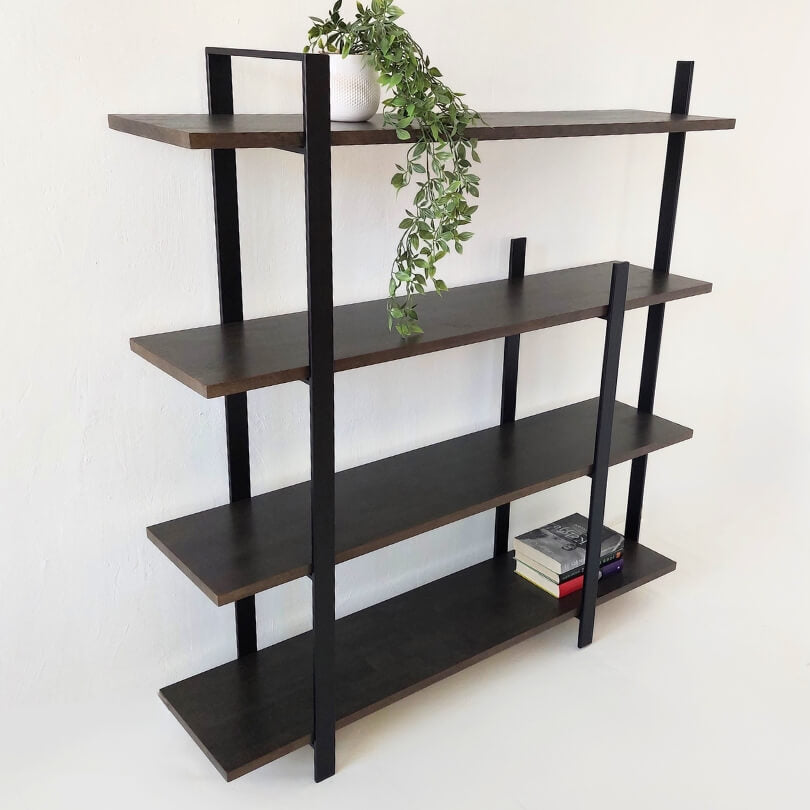
Tables with additional shelves under the main surface provide extra space for magazines, books, or decorative elements.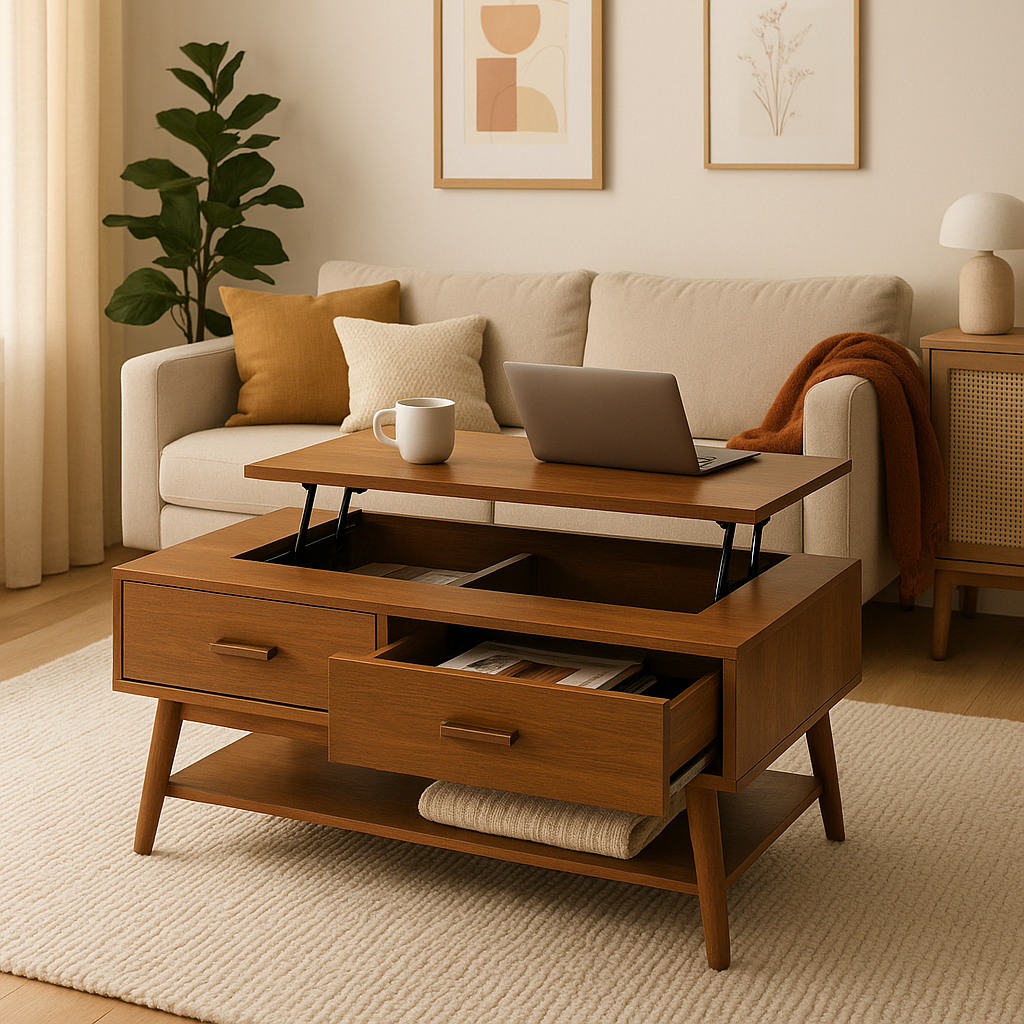
This is especially useful if you like to have reading material or remote controls close at hand.
Coffee tables with drawers are perfect for small items that you want to keep accessible but out of sight – these can be games, writing utensils, or electronic accessories. Drawers help maintain order and reduce visual clutter in the living room.
Tables with lift-tops are becoming increasingly popular due to their versatility. They allow you to easily transform the coffee table into a workspace or a surface suitable for dining – an excellent solution for those who work from home or enjoy eating while watching TV.
A coffee table on wheels provides mobility and is especially useful when you need to rearrange the space frequently. They can be easily pushed aside when more space is needed or pulled closer when required.
Multifunctional convertible tables can be incredibly useful in smaller spaces. For example, tables that can be used as an additional dining table, workspace, or even a game table.
Specialized storage compartments within the table or drawers can be designed for specific items – for example, a vinyl record collection, wine bottles, or even a special compartment for remote controls with integrated chargers.
Modular tables are separate elements that can be combined in various ways as needed. They provide flexibility as living circumstances change or when moving to a new home.
"Storage chest" type tables, which look like large cubes or boxes, often have hidden storage space inside – an excellent solution for toys, blankets, or other larger items.
When choosing a functional coffee table, it is worth considering how you most often use your living room. If it serves as the main family gathering place, a table with storage options will help maintain order. If you frequently entertain guests, a more practical option would be one that is easily movable or convertible.
It is also worth thinking about the long-term perspective – a coffee table that seems ideal now may no longer meet your needs in a few years. Versatile, functional models often prove to be worthwhile in the long run.
Summary
When choosing a coffee table for your living room, it is important to follow a few basic principles. First, carefully evaluate the available space and measure the optimal table size, considering proportions with other furniture and freedom of movement. Second, choose a shape that not only matches your aesthetic taste but is also practical for your lifestyle – for families with children, round or oval models without sharp corners are safer.
The choice of material should reflect your priorities – whether it's durability, ease of maintenance, or unique design. Remember that a coffee table can be more than just a place to put a cup – modern functional models with drawers, shelves, or lift-top sections can significantly enhance the practical value of your living room.
Finally, consider your personal style and needs – a coffee table is both a practical piece of furniture and a design element that reflects your taste and lifestyle. The right coffee table will become not only a useful but also a beloved accent in your living room for many years to come.
Frequently Asked Questions
What size coffee table is best for a standard sofa?
Ideally, the table should be the same height as the sofa's seat or up to 5 cm lower, and its length should be approximately 2/3 of the sofa's length.
What shape coffee table should I choose if I have small children?
Choose a round or oval table, or one with rounded corners – this will ensure greater safety.
What coffee table materials are the most durable and easiest to maintain?
Solid wood, metal, and high-quality composite materials are generally the most durable; glass and marble are elegant but require more maintenance.
Is it worth buying a coffee table with additional storage?
Yes – tables with drawers, shelves, or hidden compartments help maintain order in the living room and maximize space utilization.
How to match a coffee table with the living room style?
Match the material, color, and shape with other furniture and consider the overall style – natural wood suits a classic interior, glass or metal suits a modern one.